

March 18, 2026
Learn how to track coaching client progress effectively with proven strategies, tools, and systems that help life and executive coaches measure results and stay organized.
Feb 23, 2026
Explore online vs traditional coaching, their benefits, challenges, and why online coaching with platforms like usekaido is ideal for modern growth.


The coaching industry has evolved dramatically over the past decade. What once relied almost entirely on in-person sessions has expanded into a thriving digital ecosystem. Today, coaches can work with clients across cities, countries, and time zones — all from their laptop.
But the question remains: Online coaching vs traditional coaching — which model works best today?
The answer depends on your goals, your clients, and how you want to structure your coaching business. Let's break it down.
Traditional coaching refers to in-person sessions where coaches and clients meet face-to-face in a physical location.
This model often includes:
✔ Strong personal connection
✔ Fewer technical barriers
✔ Easier to read body language
✔ Familiar and structured format
For some coaches and clients, face-to-face interaction creates deeper trust and engagement.
However, traditional coaching also comes with limitations:
As the world becomes more digital, these constraints can slow business growth.
Online coaching delivers sessions virtually through video calls, digital tools, and online coaching platforms.
This model typically includes:
Online coaching has grown rapidly because it offers flexibility, scalability, and convenience for both coaches and clients.
You can work with clients anywhere in the world. This removes geographic limits and expands your market dramatically.
Online sessions can be scheduled across time zones, often with 24/7 online booking systems and automated reminders to reduce no-shows.
No need for office space. Fewer overhead expenses mean higher profit margins, especially with integrated payment collection systems.
With the help of modern coaching management software like usekaido, coaches can manage sessions, automate workflows, track progress, and centralize communication in one place.
Digital systems allow you to store session notes, track goals, and monitor client progress more efficiently than paper-based systems. Client intake forms can be easily managed and accessed through online platforms.
While online coaching offers many advantages, it also requires:
Some clients may initially prefer in-person interaction, especially if they are less comfortable with virtual tools.
However, as digital adoption increases, these barriers continue to decrease.
Let's look at key differences:
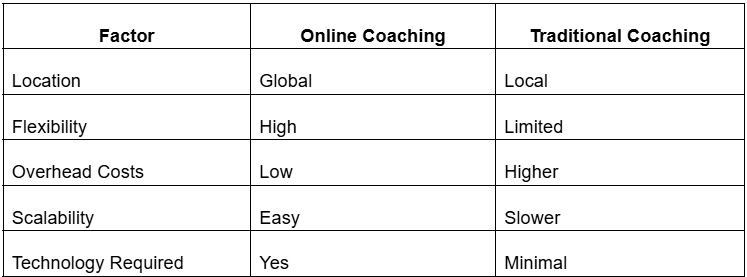
For many modern coaches, online coaching provides greater business flexibility and growth potential.
In today's digital-first world, online coaching is often the more scalable and sustainable model.
Clients increasingly value:
At the same time, hybrid models are becoming popular — combining online sessions with occasional in-person meetings when possible.
Ultimately, the best model depends on:
Technology has transformed how coaching businesses operate.
Integrated platforms like usekaido allow coaches to:
These tools make online coaching not only possible — but highly efficient. Coaching management software and other specialized tools are making it easier than ever to manage a coaching practice online.
When systems are centralized, coaches can focus more on transformation and less on administration.
The future of coaching is digital, flexible, and system-driven.
While traditional coaching still holds value, online coaching offers:
As more professionals seek flexibility in both work and personal life, online coaching continues to gain momentum. The ability to offer 24/7 online booking and eliminate back-and-forth scheduling emails is a significant advantage for both coaches and clients.
Online coaching vs traditional coaching isn't about which one is "better." It's about which model aligns with your goals and the needs of your clients.
However, in today's connected world, online coaching provides unmatched flexibility and growth potential — especially when supported by structured systems and integrated platforms like usekaido. These coaching management software solutions help streamline coaching workflows and provide a seamless experience for both coaches and clients.
When you combine effective coaching skills with modern technology, you create a business that is scalable, efficient, and ready for the future. By leveraging client portals, automated reminders, and integrated payment collection systems, coaches can reduce administrative burdens and focus on what they do best: helping clients achieve their goals.
The use of client portals, calendar sync features, and automated reminders not only enhances the client experience but also significantly improves the efficiency of coaching practices. With video conferencing integration and 24/7 online booking capabilities, coaches can offer a level of convenience that was previously impossible with traditional coaching methods.
Moreover, the adoption of comprehensive coaching management software allows for seamless handling of client intake forms, progress tracking, and session management. This technological integration helps coaches streamline their workflows, reduce no-shows, and ultimately provide a more professional and organized service to their clients.
As the coaching industry continues to evolve, those who embrace these digital tools and online coaching methodologies will be well-positioned to grow their practices and meet the changing needs of clients in an increasingly connected world.

Explore expert tips, industry trends, and actionable strategies to help you grow, and succeed. Stay informed with our latest updates.
.jpg)
March 18, 2026
Learn how to track coaching client progress effectively with proven strategies, tools, and systems that help life and executive coaches measure results and stay organized.
.jpg)
March 16, 2026
Learn how to track coaching sessions effectively with templates, tools, and best practices to stay organized and boost client progress.